The gap nobody talks about
Here is the number that should concern every contractor operating without a website: 98% of consumers searched for a local business online in the past year.1 Not most. Not a strong majority. Virtually all of them.
Now pair that with this: 27% of small businesses still do not have a website.2
That is not a minor mismatch. It is a structural failure in how more than a quarter of contractors acquire customers. When nearly every potential customer starts their search online and you have no presence there, you are not competing. You are not even in consideration. You are invisible.
Consumers who cannot find a web presence for a business will simply ignore it and choose a competitor instead.3
This is not a trend emerging on the horizon. It is the current reality. And the contractors who understand it are absorbing the customers of those who do not.
What the research actually shows
The data on consumer search behavior is unambiguous. 84% of homeowners use Google before selecting a home service provider.4 Not a recommendation from a neighbor. Not a yard sign. Google. That is where the hiring decision begins for the overwhelming majority of your potential customers.
The consequences of not showing up are equally direct. 31% of consumers have decided against using a business specifically because it lacked a website.5 Not because the work was bad. Not because the price was wrong. Because there was nothing to find. The absence itself was the disqualifier.
And the bar is not just "have a website." 62% of consumers will ignore a business entirely if it has no web presence.3 That includes your Google Business Profile, review listings, and any digital footprint at all. If a potential customer searches your name and finds nothing, you do not exist to them.
Meanwhile, the contractors who do have websites know something the rest do not. 97% of small business owners who have a website recommend that other businesses get one.6 And 88% say it made it easier for customers to find them.7 This is not a survey of marketers. It is business owners reporting what actually happened after they became visible.
The cost of being invisible
Abstract percentages matter less than concrete dollars. So let us quantify what the digital presence gap actually costs a typical contractor.
Consider a plumbing company in a mid-size market. The average plumbing job runs $350 to $500. A busy plumber might close 15 to 20 jobs per month, most of which originate from some form of search, whether Google, a directory, or a referral that still gets validated online. That is $5,000 to $10,000 per month in revenue that begins with a digital touchpoint.
Now apply the data. If 62% of consumers will skip a business with no web presence, and 31% have actively decided against a business because it had no website, you are not losing a few marginal leads. You are losing the majority of your addressable market before you ever get a chance to bid the job.
A conservative estimate of revenue invisible to a contractor who has no website, based on market-average job values and the share of consumers who disqualify businesses without a digital presence.
Even if you halve that estimate to account for referrals and repeat business that bypass search entirely, you are still looking at $30,000 to $60,000 in annual revenue that never enters your pipeline. Not revenue you lost to a cheaper competitor. Revenue that never found you at all.
The cost of a professional website is measured in hundreds of dollars per year. The cost of not having one is measured in tens of thousands.
Digital presence is more than a URL
A common misconception is that "having a website" means registering a domain and putting up a page. It does not. Digital presence is the sum of every touchpoint a consumer encounters when they search for your business or your service category.
That includes your Google Business Profile. Your review presence on Yelp, Angi, and the Better Business Bureau. Your social media accounts. And yes, your website. But the website is the hub. It is the one property you fully control, where you set the narrative, display your work, present your credentials, and convert interest into contact.
Without that hub, every other digital signal is weakened. A Google Business Profile without a website link looks incomplete. Reviews without a site to validate them raise questions. A Facebook page with no URL feels like a hobby, not a business.
46% of all Google searches have local intent.8 Nearly half the time someone types something into Google, they are looking for a business or service near them. If you operate in the trades, those searches are your customers, right now, actively looking for someone to hire. A website is the difference between catching that intent and letting it pass to whoever shows up first.
The mobile reality
The search behavior data becomes sharper when you look at mobile, which is where the majority of home services searches now happen.
70% of home service inquiries come from mobile devices.9 Not desktop. Not tablet. Phones. Your potential customer is standing in their kitchen looking at a leaking pipe, or sitting in their car after getting a quote they do not trust, or lying in bed at midnight with a broken AC unit. They are searching on their phone, and they want answers now.
Local mobile searchers who find what they are looking for visit or contact a business within one day.10
That statistic from Google deserves emphasis. 76% of people who search for a local business on their phone visit or contact that business within a day.10 This is not browsing behavior. This is buying behavior. These are people who are ready to hire, and they are making decisions in hours, not weeks.
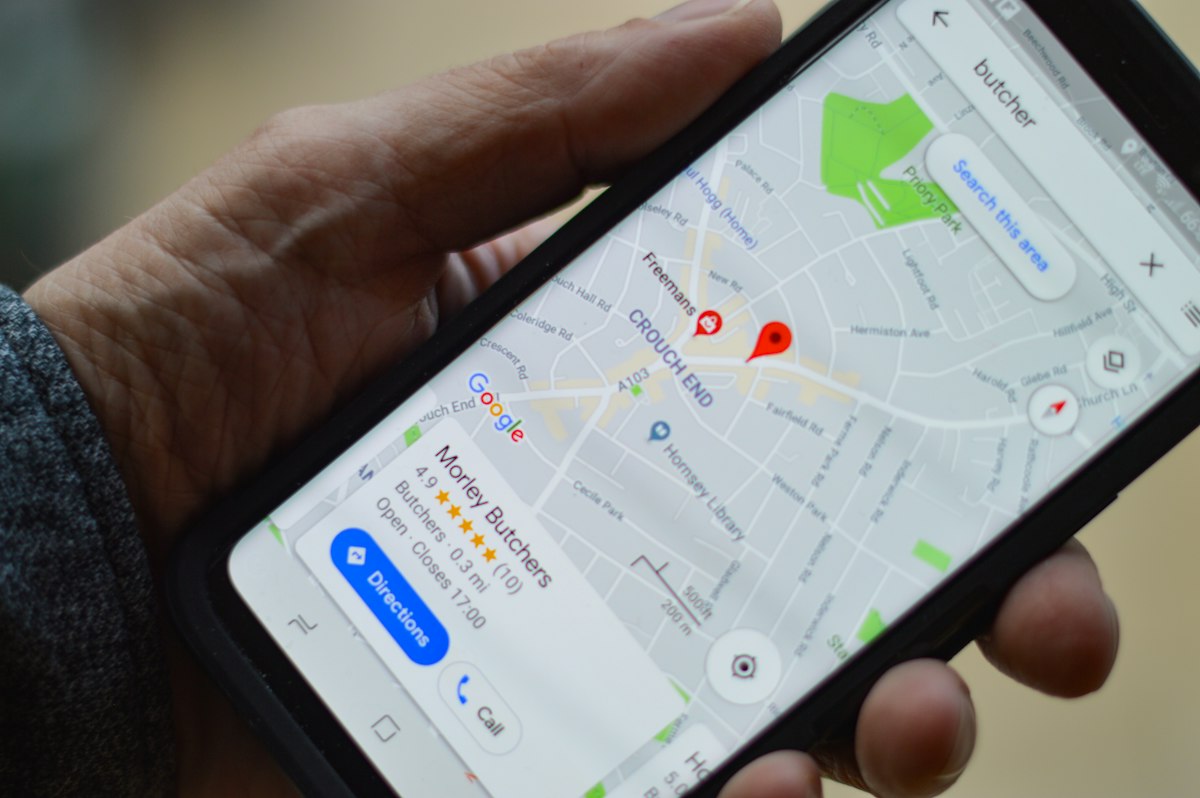
"Near me" mobile searches have grown by more than 500% in recent years.11 "Plumber near me." "Emergency HVAC near me." "Electrician near me open now." Each one of those queries is a customer with a problem, a phone in their hand, and money to spend. If you have no website, you are not in those results. You simply do not appear.
The 50-millisecond judgment
Having a website is necessary. Having a credible one is the actual requirement.
Stanford's Web Credibility Research Project found that 75% of consumers judge a business's credibility based on the design of its website.12 Not the content. Not the portfolio. The design. A site that looks outdated, amateurish, or broken tells the consumer everything they think they need to know about the quality of your work.
Researchers at Carleton University took this further. In a study published in Behaviour & Information Technology, Lindgaard et al. found that users form aesthetic judgments about a website in as little as 50 milliseconds.13 That is 0.05 seconds. Faster than a blink. Before a visitor reads a single word on your page, they have already decided whether your business looks legitimate.
And it gets worse. Stanford's research also showed that 94% of first impressions are design-related.14 Not price. Not services offered. Not location. Design. The visual quality of your website is, for nearly every visitor, the single largest factor in whether they stay or leave.
This creates a specific problem for contractors who build their own websites using generic templates. A site that technically exists but looks like it was built in 2011 may be doing more harm than no site at all, because it actively communicates a lack of professionalism. The consumer does not distinguish between "this person is bad at web design" and "this person is bad at plumbing." In 50 milliseconds, those are the same conclusion.
What this means for you
The data points in a single direction. Consumers search online before they hire. They judge credibility by what they find. They make decisions on mobile, within hours, based on visual impression and basic information availability. A contractor without a professional web presence is excluded from consideration by the majority of their potential customers.
This is not a marketing opinion. It is an observable pattern in consumer behavior, documented across multiple research sources, consistent over the past decade, and accelerating with mobile adoption.
The question is not whether you should have a website. The data settled that years ago. The question is how quickly you can close the gap between where you are and where your customers are already looking.
If you are part of the 27%, the fix is not complicated. You do not need to become a web designer. You do not need to spend thousands on an agency. You need a professional, mobile-optimized site that loads fast, looks credible, and makes it easy for someone with a phone and a problem to contact you. That is the bar. It is achievable. And the cost of not clearing it is measured in six figures.
ProPage builds professional, conversion-optimized websites for contractors. Your business details in, a finished site out, same day. No design skills required.
Build Your Free PageSources
- BrightLocal, "Local Consumer Review Survey 2024." brightlocal.com
- Wix.com, "Small Business Website Statistics" (2026). wix.com
- Small Business Web Co, "Small Business Website Statistics." smallbusinessweb.co
- Hook Agency, "Home Services Google Usage Statistics." hookagency.com
- Wix.com, "Small Business Website Statistics" (2026). wix.com
- Verisign, "2015 Online Survey: 97% of SMBs Would Recommend Having a Website." blog.verisign.com
- Verisign, "2015 Online Survey." blog.verisign.com
- Think with Google, "Local Search Statistics." thinkwithgoogle.com
- Hook Agency, "Home Services Google Usage Statistics." hookagency.com
- Think with Google, "Local Search Statistics." thinkwithgoogle.com
- Think with Google, "Near Me Searches Growth." thinkwithgoogle.com
- Stanford Web Credibility Research Project. credibility.stanford.edu
- Lindgaard, G., Fernandes, G., Dudek, C., & Brown, J. (2006). "Attention web designers: You have 50 milliseconds to make a good first impression!" Behaviour & Information Technology, 25(2), 115-126. tandfonline.com
- Stanford Web Credibility Research, "Stanford Guidelines for Web Credibility." credibility.stanford.edu